
Understand the scene before entering
Four low-light cameras provide views around the robot, helping operators check blind spots and confirm changing conditions.
HYPER AIFORCE
Explore FORCE 01 and FORCE 05 robotic inspection systems.
FORCE SERIES
Send your physical avatar to observe, inspect and respond. Choose the form that fits your site and your task.
01 / Panoramic Ultra-range Teleoperation Robot
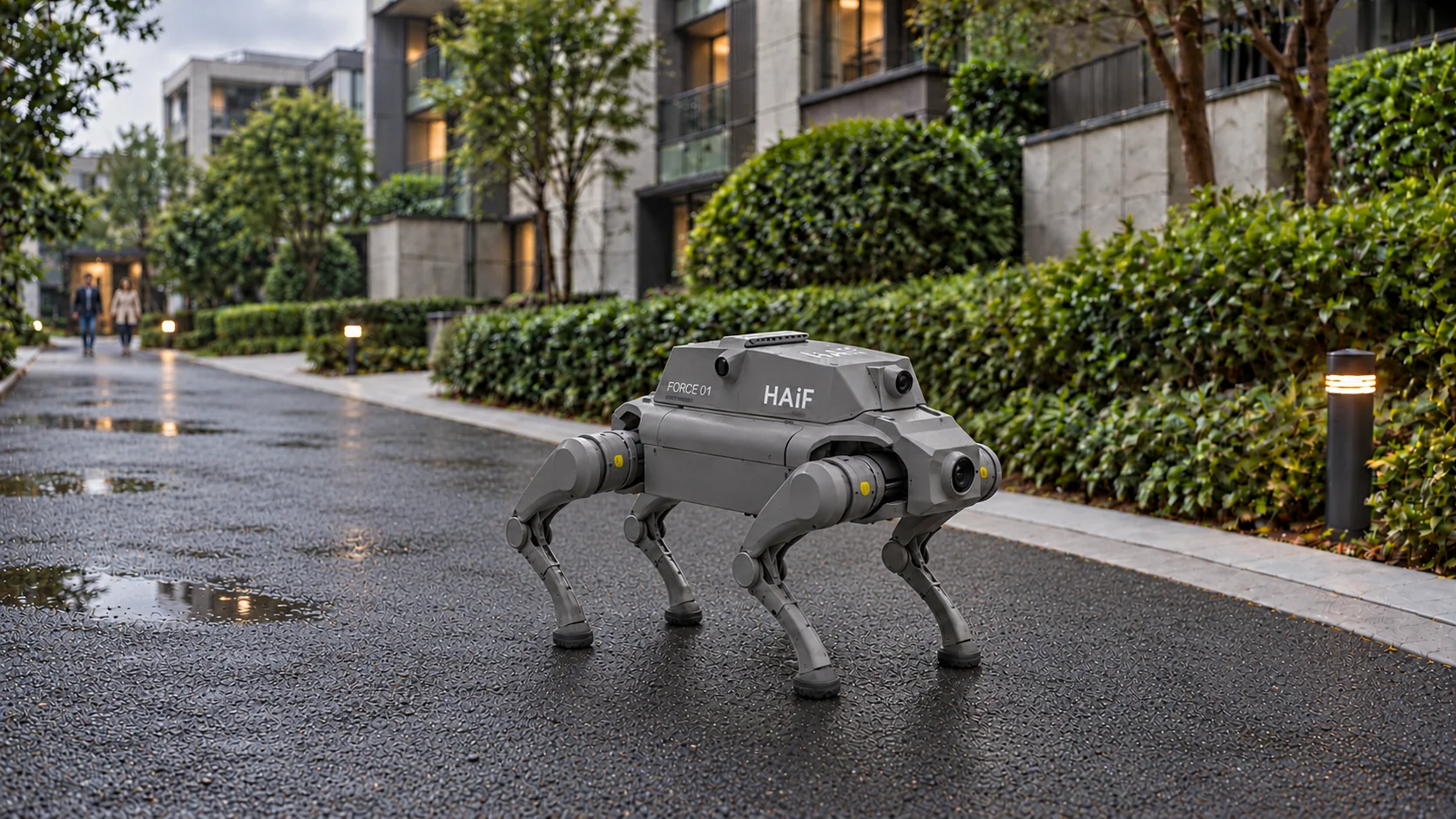
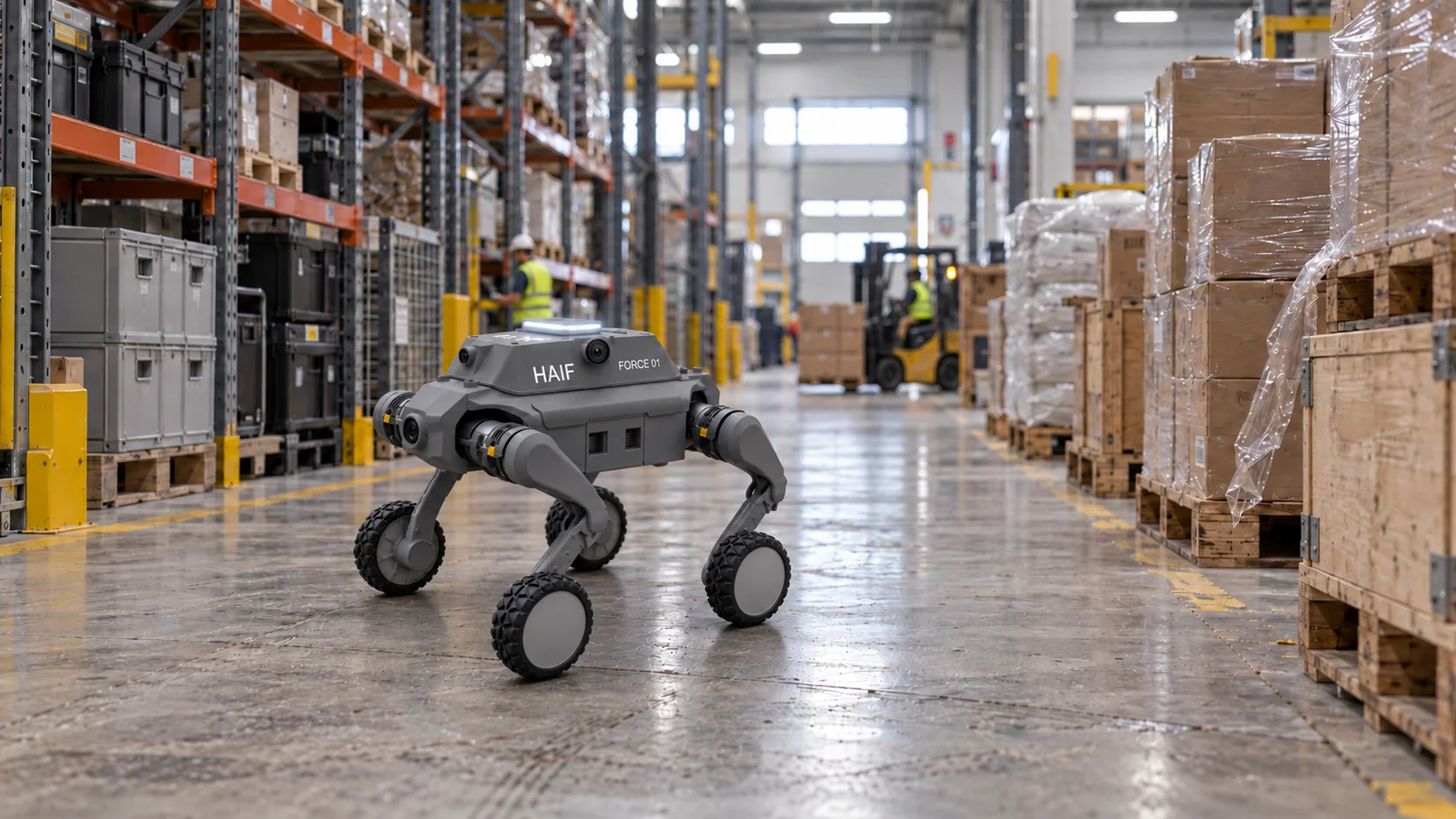
A legged or wheeled-leg robot with an integrated panoramic backpack for ultra-range teleoperation. Operate across distant sites beyond visual line of sight (BVLOS), using live video and motion control. Operating distance depends on network coverage and configuration.
See clearly. Act remotely.
Four low-light cameras provide views around the robot, helping operators check blind spots and confirm changing conditions.
Live video and ultra-range teleoperation let operators at distant sites move the robot closer, change viewpoint and inspect without repeated site visits.
Select a legged or wheeled-leg configuration to suit the routes and surfaces at your site. Add sensing payloads to match the task.
02 / Spherical Mobile Inspection Robot
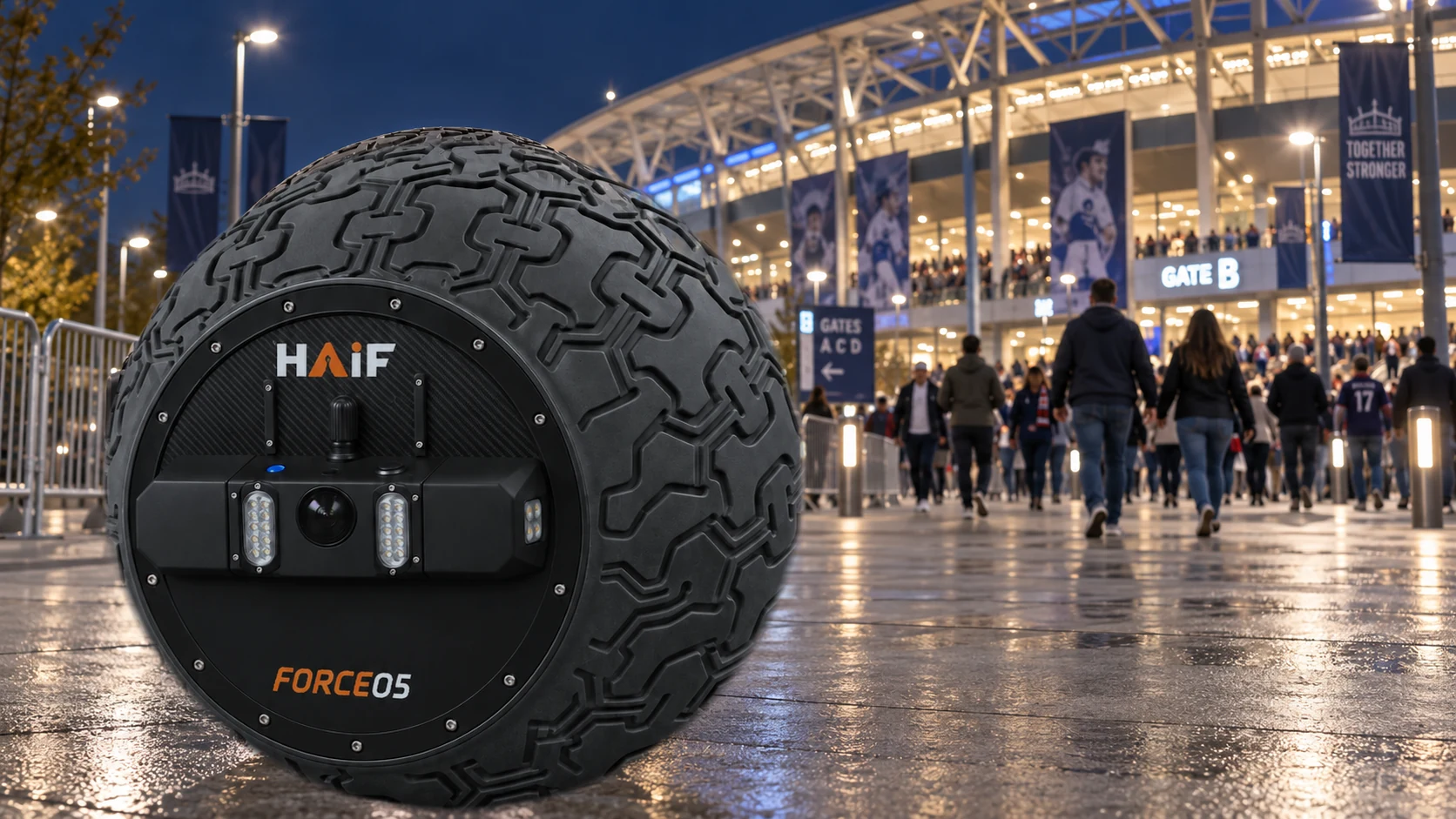
A spherical platform for remote observation around stadium approaches. Patrol routes and operating zones are planned around pedestrian movement.
A spherical robot for inspection and remote observation in demanding environments. Internal pendulum drive and active flywheel stabilization support controlled rolling and on-site sensing.
See clearly. Act remotely.
Send the robot ahead to observe public spaces, site perimeters and difficult-to-reach areas while operators assess the scene remotely.
A spherical body with no exposed legs combines internal drive and active stabilization for controlled movement and recovery from disturbances.
Configure thermal imaging, gas detection, lighting or a communications relay for inspection and remote assessment.
PROJECT CONSIDERATIONS
Assess the operating environment, observation requirements and control workflow before defining the robotic system.
Review route surfaces, access constraints and observation points. Platform selection should follow the conditions of the site.
Define the information required by operators, the available connectivity and the procedure for ultra-range intervention.
Confirm sensing payloads, software interfaces and operating procedures as part of a project-specific configuration.